"Grow Curious, Stay Green."

Why Springtails Are Essential for Every Terrarium: The Ultimate Bioactive Cleanup Crew
By TropicalZone Team
If you’ve ever built a terrarium, chances are you’ve experienced the excitement of watching a miniature ecosystem come to life. The plants settle in, the moss begins to spread, and the enclosure starts resembling a tiny slice of rainforest. Then, seemingly out of nowhere, you notice white fuzzy mold appearing on driftwood, leaf litter, or the substrate surface.
For many beginners, this can feel like the beginning of a disaster.
For experienced terrarium keepers, however, it usually means one thing:
The cleanup crew hasn’t arrived yet.
Among all the organisms used in bioactive terrariums, few are as valuable as springtails. These tiny creatures may be almost invisible to the naked eye, but they play a massive role in maintaining a healthy ecosystem. In fact, many experienced hobbyists consider springtails just as important as the plants themselves.
At TropicalZone, we’ve seen countless terrarium enthusiasts transform struggling setups into thriving ecosystems simply by introducing a healthy springtail population. Whether you’re building a closed terrarium, vivarium, mossarium, or tropical plant display, springtails can make the difference between constant maintenance and a self-sustaining ecosystem.

Caption: A healthy springtail culture ready to be introduced into a bioactive terrarium.
What Are Springtails?
Understanding the Role of Springtails in Ecosystem Health
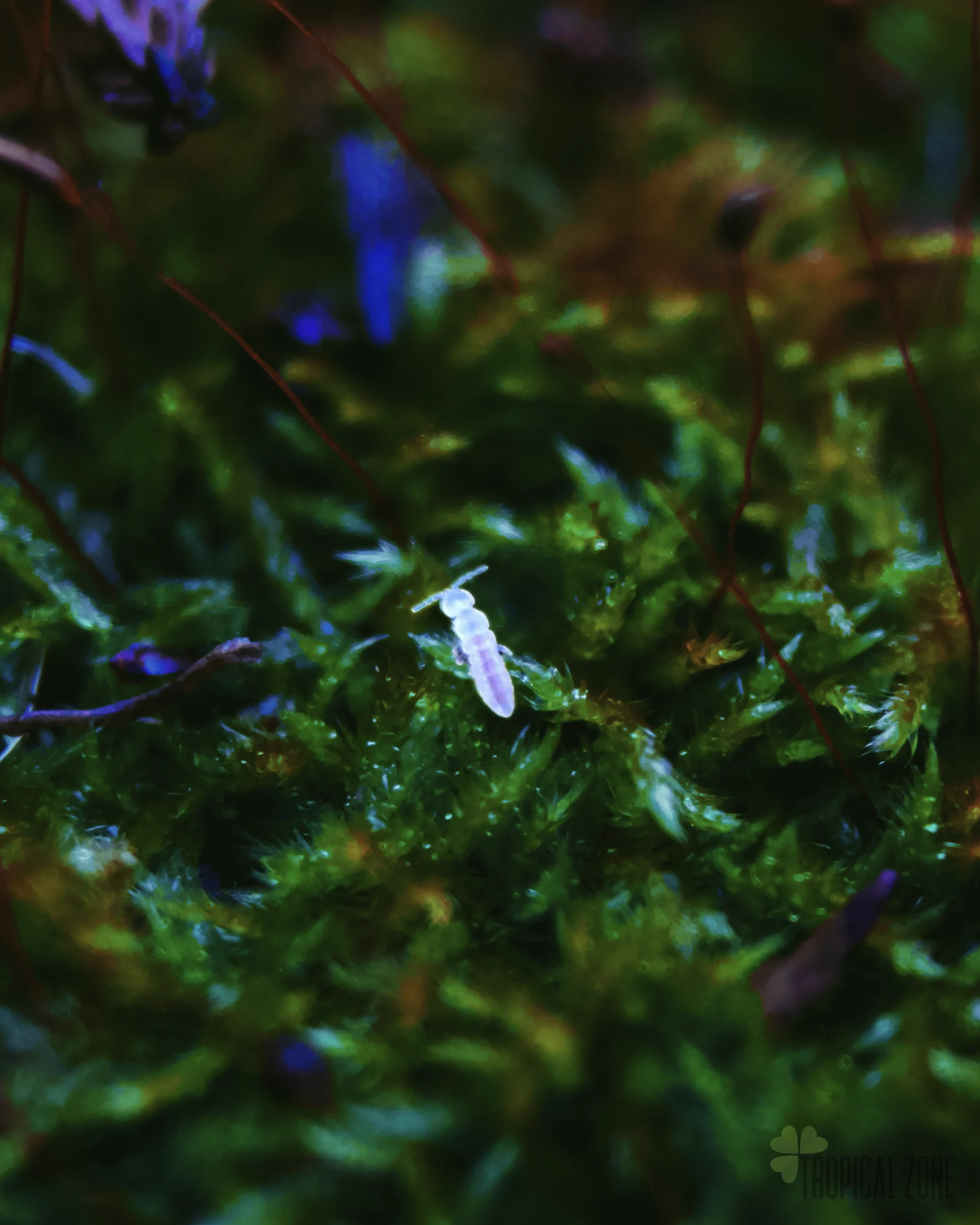
Springtails are tiny soil-dwelling arthropods that belong to a group known as Collembola. They are found naturally in forests, gardens, leaf litter, moss beds, and almost every healthy ecosystem on Earth.
Despite often being mistaken for insects, springtails belong to their own distinct group and have evolved specifically to thrive in moist environments rich in organic matter.
Most springtails measure only a few millimeters in length and are usually white, grey, or translucent. Their name comes from a specialized structure beneath their bodies that allows them to “spring” into the air when disturbed.
While they may appear insignificant, springtails perform one of the most important jobs in nature:
They recycle waste and keep ecosystems clean.
In the wild, springtails continuously break down decaying organic matter, fungi, mold, and microscopic debris. In a terrarium, they perform exactly the same function.
Why Every Terrarium Needs a Cleanup Crew
A terrarium is essentially a miniature ecosystem enclosed within glass. While beautiful, these environments can quickly develop problems if waste begins to accumulate.
Organic materials constantly break down inside a terrarium:
- Dead leaves
- Moss fragments
- Decaying roots
- Excess food
- Wood fibers
- Plant debris
Without organisms to process this waste, the enclosure can become a breeding ground for mold and unwanted fungi.
This is where springtails become invaluable.
Think of them as tiny maintenance workers operating 24 hours a day. They continuously patrol the enclosure, consuming decaying matter before it can cause larger issues.
Unlike manual cleaning, springtails work constantly and reach areas that are difficult or impossible for hobbyists to access.
A healthy springtail colony often prevents problems before they even become visible.

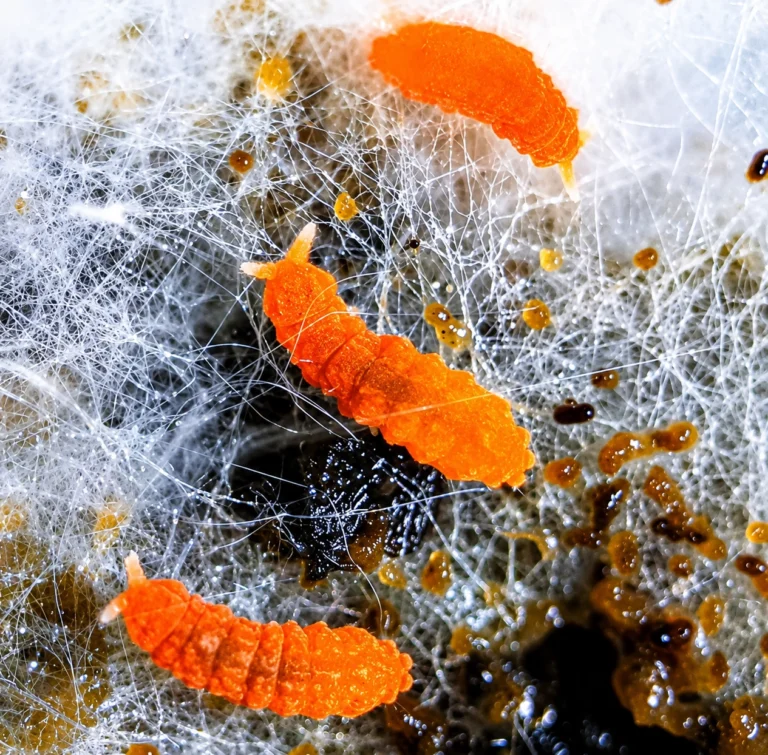
Caption: Mold outbreaks are common in newly established terrariums that lack a bioactive cleanup crew.
How Springtails Control Mold Naturally
One of the most common challenges in terrarium keeping is mold.
New terrariums are especially vulnerable because fresh wood, leaves, moss, and organic substrates create ideal conditions for fungal growth.
The first appearance of mold often causes panic among beginners.
The good news?
Mold itself is usually a natural part of ecosystem development.
The better news?
Springtails absolutely love eating it.
Many springtail species feed directly on fungal spores, mold colonies, and decomposing organic material. As they graze across surfaces, they help keep fungal populations under control.
Rather than eliminating every trace of fungus—which would be impossible and undesirable—they help maintain balance.
This natural control system is one of the main reasons bioactive terrariums remain healthier and more stable over time.
Without springtails, mold outbreaks can become extensive and visually unappealing.
With springtails, those outbreaks are often reduced before they become noticeable.
Springtails and Bioactive Terrariums
The term “bioactive terrarium” has become increasingly popular in recent years.
A bioactive terrarium is designed to function as a miniature ecosystem where living organisms work together to maintain environmental balance.
Instead of constantly cleaning, replacing materials, and fighting mold, hobbyists allow nature to handle much of the work.
Springtails are often considered the foundation of this approach.
They contribute to:
- Organic waste breakdown
- Mold management
- Nutrient recycling
- Soil health
- Ecosystem stability
Without springtails, a bioactive system is incomplete.
This is why experienced terrarium keepers often introduce springtails before adding sensitive plants or valuable specimens.

Caption: A thriving bioactive terrarium supported by springtails and beneficial microorganisms.
How Springtails Benefit Terrarium Plants
Most hobbyists focus on how springtails benefit the enclosure itself.
However, the plants also benefit tremendously.
As springtails consume organic waste, nutrients are gradually returned to the substrate in forms that plants can utilize.
Their activity helps:
- Improve soil structure
- Accelerate decomposition
- Support beneficial microorganisms
- Reduce harmful fungal buildup
- Encourage healthier root environments
This creates conditions that many tropical plants naturally prefer.
Plants commonly grown in terrariums, including:
- Marcgravia
- Selaginella
- Mosses
- Jewel Orchids
- Ficus species
- Miniature Ferns
often perform better in biologically active substrates.
Recommended Internal Link: TropicalZone Terrarium Plants Collection
Are Springtails Safe for Plants?
One of the most common misconceptions is that springtails damage plants.
In reality, healthy springtails do not attack healthy living plant tissue.
Their diet consists primarily of:
- Mold
- Fungi
- Decaying matter
- Organic debris
- Microorganisms
Because of this, they are considered completely plant-safe.
In fact, many professional growers intentionally introduce springtails into propagation chambers, greenhouse environments, and terrarium systems.
Rather than harming plants, they often contribute to healthier growing conditions.
Are Springtails Safe for Reptiles and Amphibians?
Absolutely.
Springtails are widely used in:
- Dart frog vivariums
- Gecko enclosures
- Isopod setups
- Bioactive reptile habitats
- Amphibian displays
Many reptiles and amphibians may occasionally consume springtails as supplemental live food.
Because springtails are naturally present in many wild ecosystems, they are considered one of the safest cleanup crew organisms available.

Caption: Springtails actively consume mold, fungi, and decomposing organic material within the enclosure.
Why Advanced Hobbyists Always Keep Backup Cultures
One habit that separates experienced keepers from beginners is maintaining backup cultures.
A dedicated springtail culture offers several advantages:
- Easy population replenishment
- Quick startup for new terrariums
- Emergency replacement source
- Ability to seed multiple projects
Many hobbyists maintain cultures continuously so they always have a healthy population available when needed.
Recommended Internal Link: TropicalZone Springtail Culture
Common Mistakes Beginners Make
Introducing Springtails Too Late
Many people wait until mold appears before adding springtails.
Introducing them early is usually far more effective.
Letting Cultures Dry Out
Springtails require moisture to survive and reproduce.
Dry conditions can quickly reduce populations.
Expecting Instant Results
Springtails need time to establish and reproduce.
They are a long-term solution rather than an overnight fix.
Over-Cleaning the Terrarium
Removing every piece of leaf litter or organic matter limits food sources and reduces population stability.
Springtails vs Isopods
Springtails are often compared to isopods.
Both are valuable cleanup crew organisms, but they serve different roles.
Springtails excel at:
- Mold control
- Fungal management
- Micro-debris cleanup
Isopods excel at:
- Breaking down larger debris
- Consuming leaf litter
- Processing organic waste
Together, they create one of the most effective bioactive cleanup systems available.
Many advanced terrarium keepers use both.
Signs of a Healthy Springtail Population
A thriving springtail colony often displays:
- Visible activity on substrate surfaces
- Presence around moist areas
- Stable reproduction rates
- Reduced mold outbreaks
- Improved substrate cleanliness
As populations grow, their impact becomes increasingly noticeable.
The enclosure remains cleaner with significantly less intervention from the keeper.
Why Springtails Are Perfect for Tropical Terrariums
Tropical terrariums naturally provide the conditions springtails love:
- High humidity
- Organic matter
- Stable temperatures
- Moist substrates
This allows populations to establish rapidly and maintain themselves with minimal effort.
For collectors growing rare tropical species, springtails provide an additional layer of ecosystem stability that can help protect valuable plants.
Recommended Internal Links:
- TropicalZone Moss Collection:
- TropicalZone Selaginella Collection
- TropicalZone Marcgravia Collection
Frequently Asked Questions
Do springtails eat living plants?
No. Springtails primarily consume mold, fungi, and decaying organic matter.
Can springtails eliminate all mold?
No. However, they significantly reduce mold growth and help maintain balance within the ecosystem.
How long does it take for springtails to establish?
Most colonies begin establishing within a few weeks under suitable conditions.
Are springtails harmful to humans?
No. Springtails are harmless to humans, pets, reptiles, amphibians, and plants.
Do I need springtails in every terrarium?
While not mandatory, they are highly recommended for almost every tropical or bioactive setup.
Can springtails live in closed terrariums?
Yes. Closed terrariums often provide ideal conditions for healthy populations.
Final Thoughts
When people think about terrarium success, they usually focus on plants, lighting, substrates, and hardscape design.
Yet some of the most important contributors to a healthy ecosystem are nearly invisible.
Springtails may be tiny, but their impact is enormous.
From controlling mold and recycling waste to supporting plant health and maintaining ecosystem balance, they perform countless tasks that help terrariums thrive naturally.
Whether you’re creating your very first closed terrarium or expanding an advanced bioactive vivarium, introducing springtails is one of the smartest decisions you can make.
At TropicalZone, we’re passionate about helping hobbyists build healthier, more sustainable ecosystems. From springtail cultures and rare terrarium plants to mosses, Selaginella, Marcgravia, and exotic tropical species, our goal is to provide everything you need to create a thriving slice of nature at home.
A healthy terrarium isn’t just about the plants you can see—it’s also about the ecosystem working behind the scenes. And few organisms work harder than springtails. 🌿✨🪴💚