
"Grow Curious, Stay Green."

Wild Betta Fish : How They Differ from Pet Store Bettas and Why Hobbyists Are Obsessed
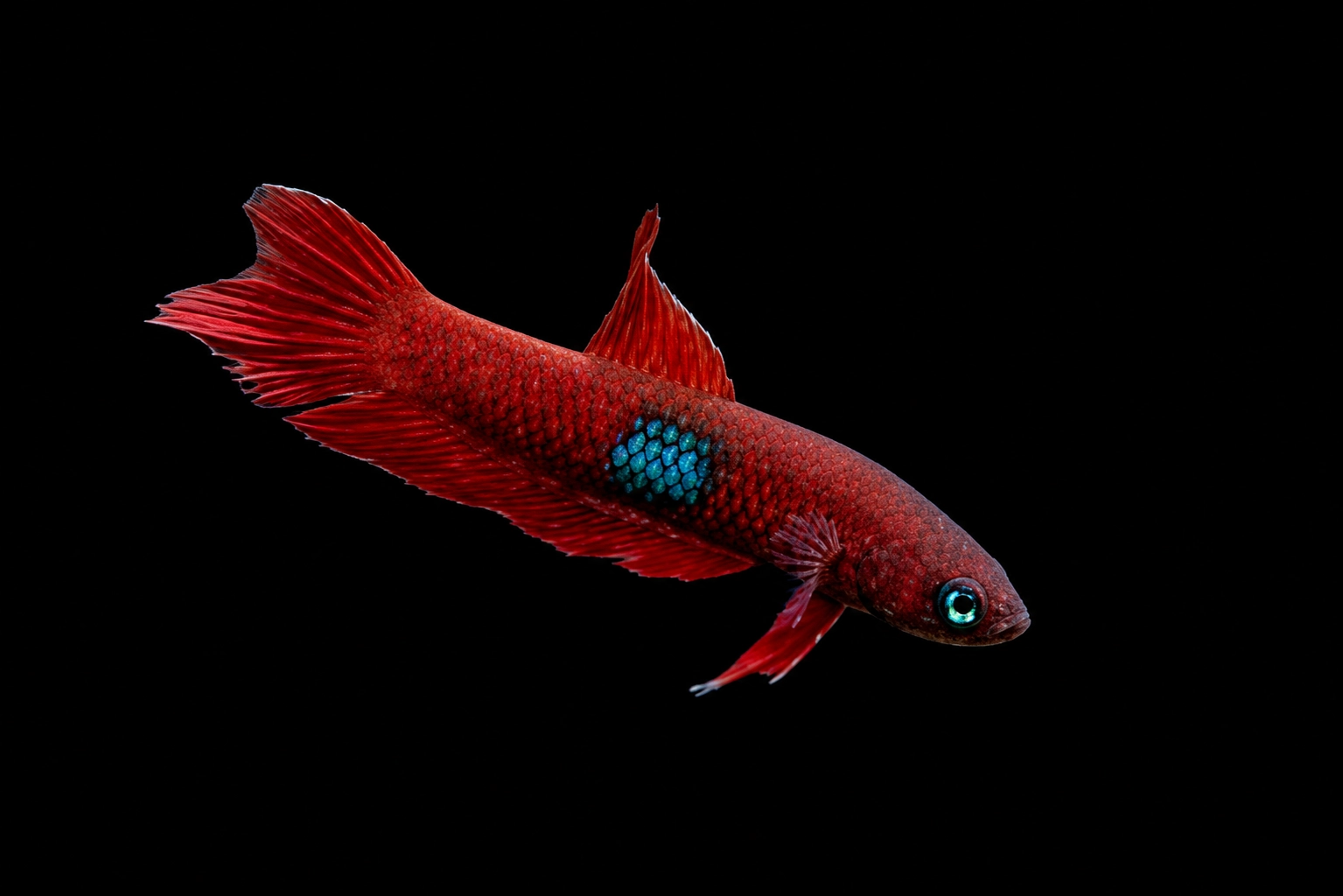
Table Of Contents
- 1. What Is a Wild Betta Fish?
- 2. Wild Betta vs Pet Store Betta: The Core Differences
- 3. Wild Bettas Available in India — A Closer Look
- 4. More Wild Betta Species Worth Knowing
- 5. Bubblenester vs Mouthbrooder: A Behaviour That Changes Everything
- 6. What Wild Bettas Actually Look Like
- 7. Wild Betta Fish Care: What You Need to Know
- 8. Setting Up a Blackwater Aquarium for Wild Bettas
- 9. Conservation Status: Why This Hobby Matters
- 10. Why Are Hobbyists So Obsessed?
- ❓ Frequently Asked Questions About Wild Betta Fish
- There's a Whole World Beyond the Cup
Walk into any pet store in India — Mumbai, Bangalore, Delhi, Pune — and you’ll find them: Betta fish stacked in small cups, their long jewel-coloured fins trailing like fabric in the water. They are beautiful. They are popular. And they represent just one species out of 73 that exist in the wild.
That single species — Betta splendens, the Siamese fighting fish — has been selectively bred for nearly a century, engineered for colour intensity, fin length, and dramatic display. The fish in your local aquarium shop looks almost nothing like its wild ancestor. And most hobbyists have no idea that an entirely different world exists beyond that tiny cup.
Wild Betta fish are the other 72 species. They live in peat swamps, forest streams, rice paddies, and tannin-stained blackwater rivers across Southeast Asia. Some are peaceful enough to keep in pairs. Some carry their young in their mouths for weeks. Some are critically endangered. All of them are utterly captivating to anyone who spends real time with them.
This guide is your entry point into that world — including a look at the wild Betta species that have quietly made their way into the Indian hobby through specialist sources like TropicalZone, one of the very few places in India where these fish can be sourced responsibly.
1. What Is a Wild Betta Fish?
The term “wild Betta” refers to any species within the Betta genus that has not been selectively bred for the aquarium trade. These are fish as nature made them — adapted to specific micro-habitats across Thailand, Malaysia, Indonesia, Vietnam, Cambodia, and Borneo.
The genus Betta currently contains 73 recognised species, and that number continues to grow as ichthyologists explore the peat swamps and forest streams of Southeast Asia. These species are grouped into “complexes” — clusters of closely related fish that share habitat, body shape, and breeding behaviour. The most well-known is the splendens complex, which includes the wild ancestor of your pet store Betta.
Key Fact: All Betta species — wild and domestic — share one defining feature: the labyrinth organ, a specialised breathing structure that allows them to gulp air directly from the surface. This is why they can survive in low-oxygen environments like peat swamps and rice paddies.
Unlike Betta splendens, most wild species were never bred for aggression or appearance. They evolved for survival — developing camouflage colouration, complex parenting behaviours, and remarkable adaptability to extreme water conditions, including pH as low as 3.0 in some peat swamp environments.
2. Wild Betta vs Pet Store Betta: The Core Differences
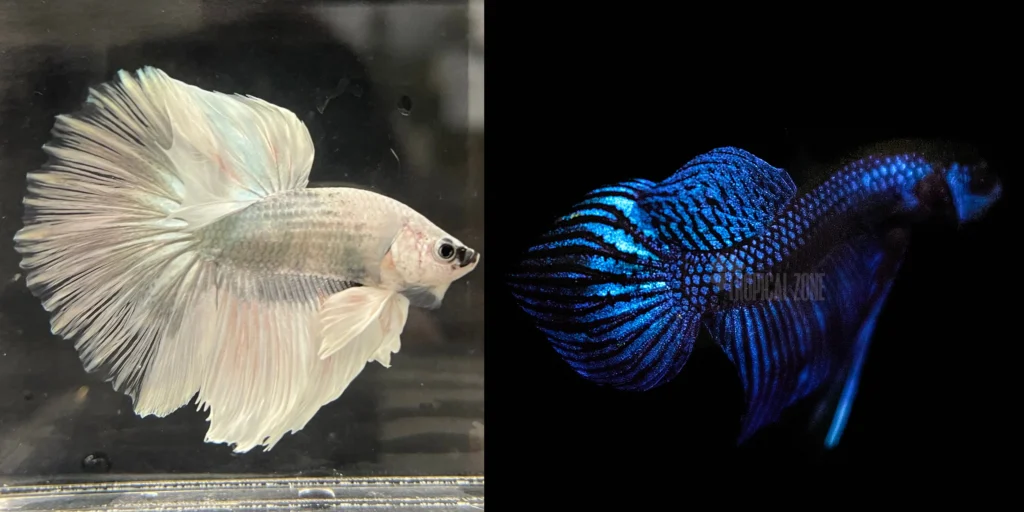
The pet store Betta (Betta splendens) and wild Betta fish are related, but comparing them is like comparing a show dog to a wolf. The biology is the same; everything else has changed.
| Feature | Wild Betta (Various Species) | Pet Store Betta (B. splendens) |
|---|---|---|
| Number of species | 72+ wild species | 1 domesticated species |
| Fin length | Short, compact — built for wild water | Long, flowing — selectively bred for display |
| Colouration | Iridescent, contextual — brightens during display; serves as camouflage at rest | Consistently vivid — bred for constant visual impact |
| Aggression | Varies widely — many are peaceful, can be kept in pairs | Highly aggressive — males cannot coexist |
| Breeding behaviour | Both bubble-nesters and mouthbrooders; complex parental care | Bubble-nesters only |
| Water requirements | Often soft, acidic, tannin-rich; species-specific | Adaptable — tolerates a wide pH range |
| Availability in India | Limited — specialist sources like TropicalZone | Available at most pet stores |
| Price range | ₹1,399 – ₹5,000+ depending on species | ₹50–₹500 commonly |
| Conservation status | Several species Endangered or Critically Endangered (IUCN) | Domesticated — not evaluated |
| In-tank behaviour | Complex — territorial displays, parental care, pair bonding | Mostly solitary display behaviour |
3. Wild Bettas Available in India — A Closer Look
Finding wild Betta species in India used to mean scouring hobbyist groups and waiting months. TropicalZone is one of the few sources in India importing and stocking these rare wild species for serious hobbyists. Below are the four species currently available — each one genuinely different in origin, personality, and care requirements.
Betta Mahachai Green
Betta mahachaiensis — Green variant
pH6.0 – 7.5
Temp24°C – 29°C
Tank38–57L (10–15 gal)
BreedingBubble-nester
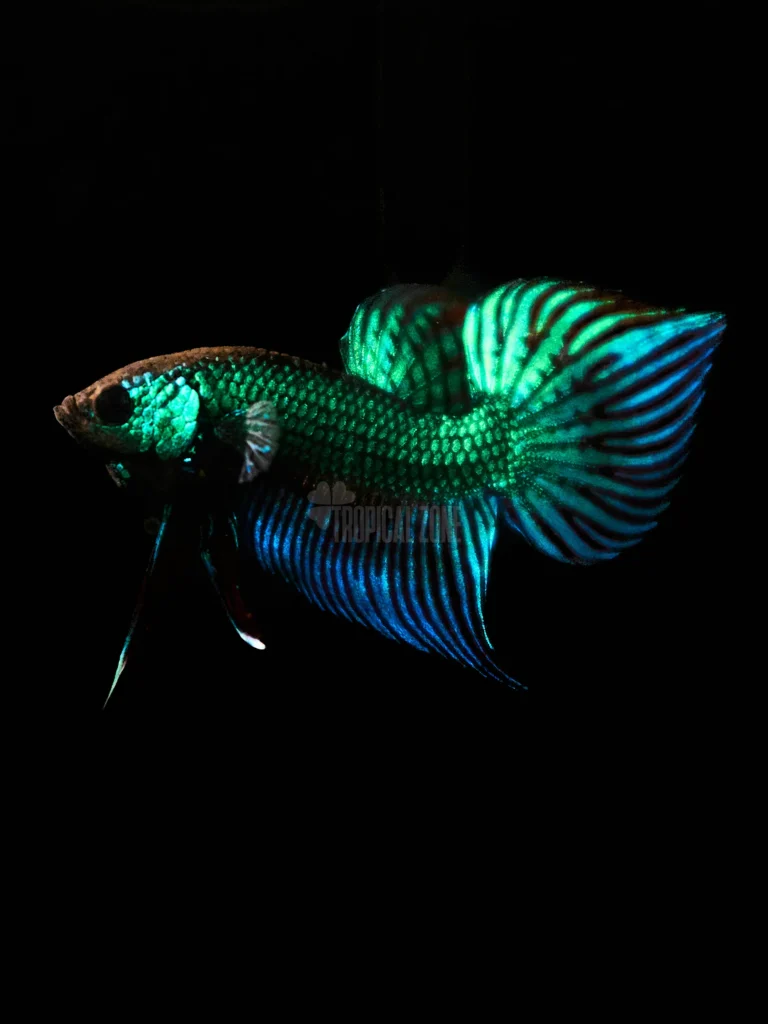
Native to the brackish canals and nipa palm swamps around the Mahachai region of Samut Sakhon, Thailand, this is one of the most visually striking members of the wild Betta splendens complex. The Mahachai Green displays a metallic emerald-green iridescence that shifts from blue to green as it moves under light — something no pet store Betta can replicate. Males are far less aggressive than B. splendens and can sometimes be housed in larger, well-planted species tanks with adequate territory. Notably adapted to slightly brackish conditions, making it one of the more unique wild Bettas in terms of water requirements. Learn more on TropicalZone →
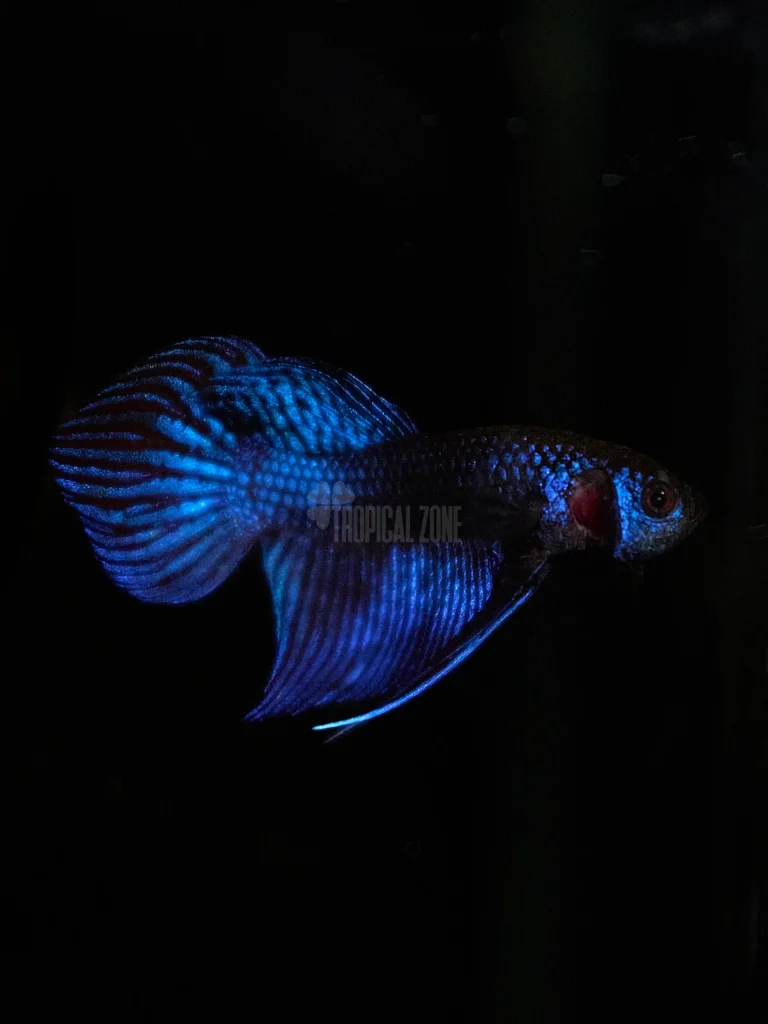
Betta Mahachai Blue
Betta mahachaiensis — Blue variant
pH6.5 – 7.5
Temp24°C – 28°C
Tank38–57L (10–15 gal)
BreedingBubble-nester
The Blue variant of Betta mahachaiensis comes from the same tidal swamp habitat as the Green, but displays an intense sapphire-blue iridescence layered over a darker base — creating a luminous, electric effect under aquarium lighting that is genuinely unlike anything seen in domesticated Bettas. Its shorter, more natural fin structure allows it to swim with speed and precision rarely seen in the long-finned pet store varieties. Like the Green variant, it appreciates slightly harder water and tolerates a touch of salinity, making it versatile compared to most acidic-water wild Betta species. Learn more on TropicalZone →
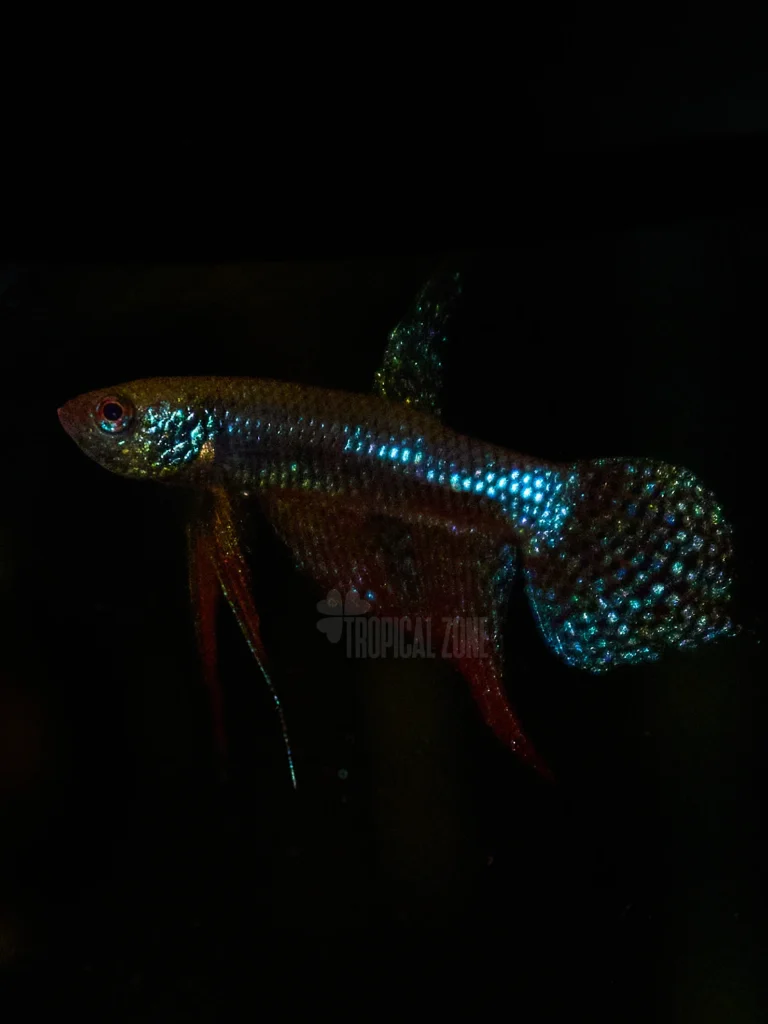
Betta Smaragdina Carbon
Betta smaragdina — Carbon morph
pH5.5 – 7.5
Temp22°C – 28°C
Tank30–50L
BreedingBubble-nester
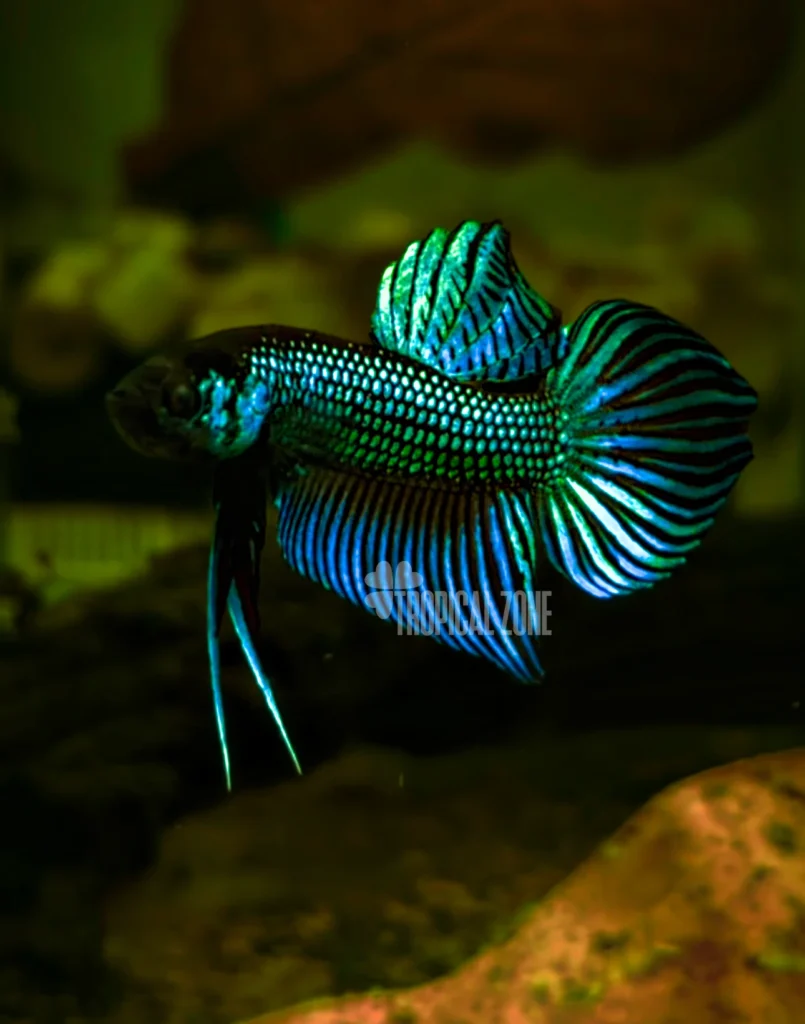
The Carbon morph of Betta smaragdina is arguably the most visually dramatic of TropicalZone’s current Betta lineup — a deep carbon-black base coloration electrified with flashes of emerald-green iridescence that appear almost bioluminescent under the right lighting. Native to slow-moving streams and rice paddies of Northeast Thailand, B. smaragdina is one of the hardiest wild Betta species, tolerating a broader pH range than most — making it genuinely accessible for Indian hobbyists dealing with variable tap water. The Carbon form specifically is a rare collector’s morph that is seldom seen in India’s aquarium trade. Learn more on TropicalZone →
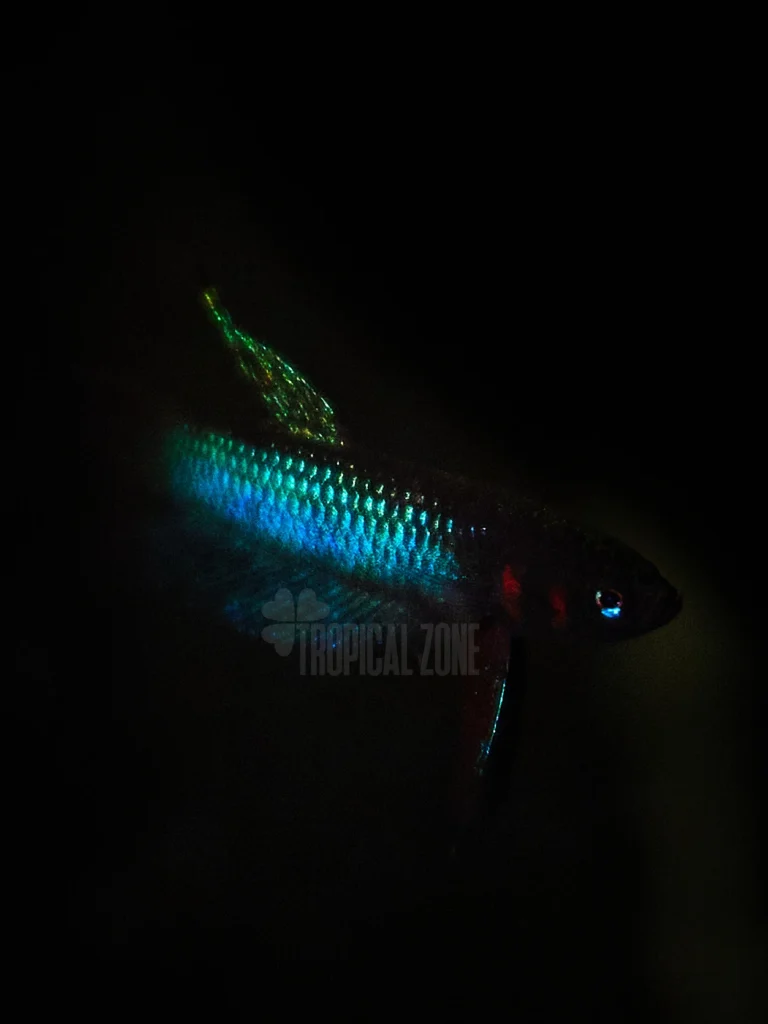
Betta Hendra
Betta hendra — Coccina Complex
pH4.0 – 6.5
Temp24°C – 28°C
Tank38L (10 gal) min
BreedingMouthbrooder
The most advanced species in TropicalZone’s lineup, and possibly the most extraordinary. Betta hendra is a member of the coccina complex — a group of small, jewel-like blackwater Bettas from the peat swamp forests of Kalimantan, Borneo. Males display a velvety deep ruby-red to crimson colouration with subtle blue-green iridescent fin highlights that shimmer in low light — earning it the nickname “Ruby Ghost” among collectors. Critically, it is a mouthbrooder: the male incubates fertilised eggs in his mouth for one to two weeks, not eating the entire time. Listed as Critically Endangered by the IUCN due to peat swamp destruction in Borneo, every captive-bred individual in a hobbyist’s tank carries genuine conservation value. Requires very soft, acidic blackwater conditions — not suitable for unconditioned Indian tap water, but deeply rewarding for prepared hobbyists. Learn more on TropicalZone →
💡 Which one should you start with? If you’re new to wild Bettas, the Betta Mahachai Green or Smaragdina Carbon are the best entry points — both tolerate a wider range of water parameters and are more forgiving of the inevitable beginner mistakes. The Betta Hendra is genuinely for experienced hobbyists with a dedicated blackwater setup using RO water.
4. More Wild Betta Species Worth Knowing
Beyond TropicalZone’s current stock, the wider wild Betta hobby encompasses dozens more species — each with a distinct personality, habitat, and aesthetic. Here’s a broader overview to give you the full picture of what exists in the genus.
| Species | Common Name | pH | Breeding | Difficulty | Known For |
|---|---|---|---|---|---|
| B. mahachaiensis | Mahachai Betta | 6.0–7.5 | Bubble-nester | Intermediate | Brackish tolerance; metallic iridescence |
| B. smaragdina | Emerald Betta | 5.5–7.5 | Bubble-nester | Beginner | One of the hardiest wild Bettas; wide pH range |
| B. hendra | Ruby Ghost / Hendra’s Betta | 4.0–6.5 | Mouthbrooder | Advanced | Deep ruby colouration; critically endangered |
| B. imbellis | Peaceful Betta | 5.5–7.0 | Bubble-nester | Beginner | Less aggressive; can be kept in pairs |
| B. albimarginata | Strawberry Betta | 5.0–7.0 | Mouthbrooder | Intermediate | Rich red-orange colouration; cooperative pair behaviour |
| B. channoides | Snakehead Betta | 4.5–6.5 | Mouthbrooder | Intermediate | Elongated body; fascinating courtship behaviour |
| B. brownorum | Scorpion Betta | 3.0–4.0 | Bubble-nester | Advanced | Bright red with luminous blue cheek spot |
| B. macrostoma | Brunei Beauty | 4.0–6.0 | Mouthbrooder | Expert | “Holy grail” of wild Bettas; thought extinct for 50 years |
| B. pugnax | Penang Mouthbrooder | 6.0–7.2 | Mouthbrooder | Advanced | Largest mouthbrooder; needs cooler water |
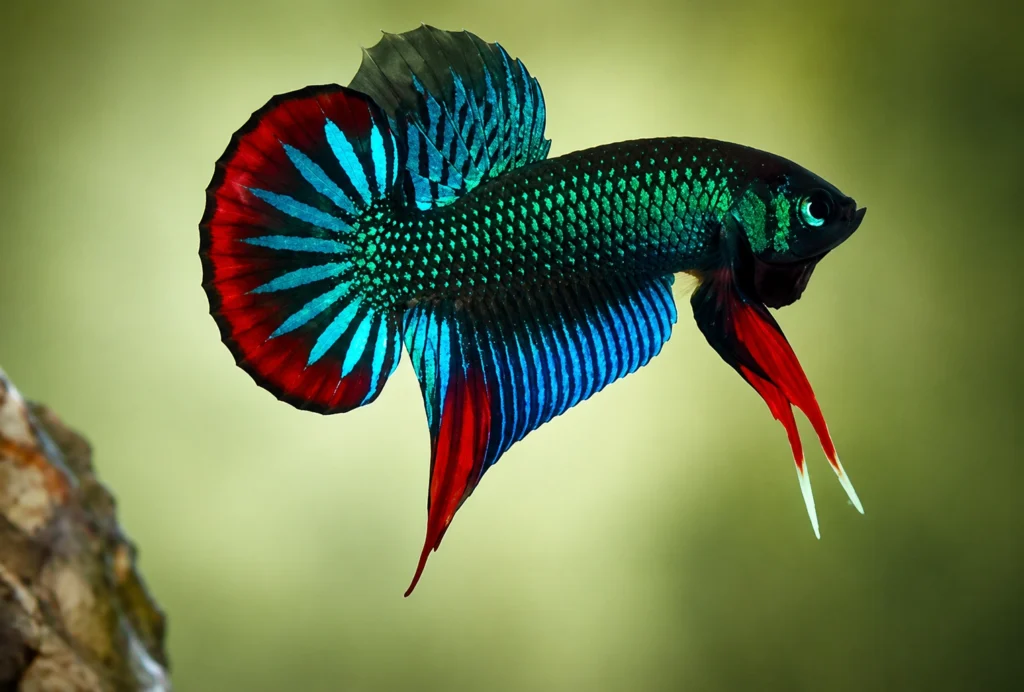
Betta imbellis
Shimmering blue-green scales with a red crescent on the tail. The most beginner-friendly wild Betta — males are far less aggressive than B. splendens and can sometimes coexist in well-planted species tanks.
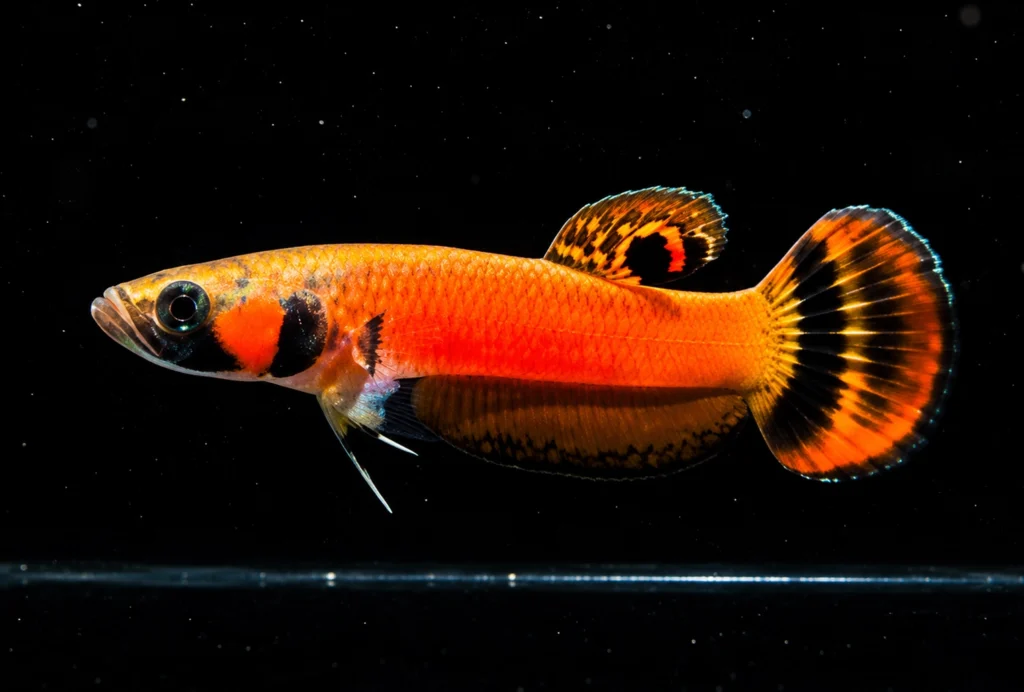
Betta macrostoma
Considered the holy grail of wild Bettas. Thought extinct for 50 years before rediscovery in 1981. Vivid orange-red body with dark-banded fins. A paternal mouthbrooder and one of the most demanding species to keep — but unforgettable.
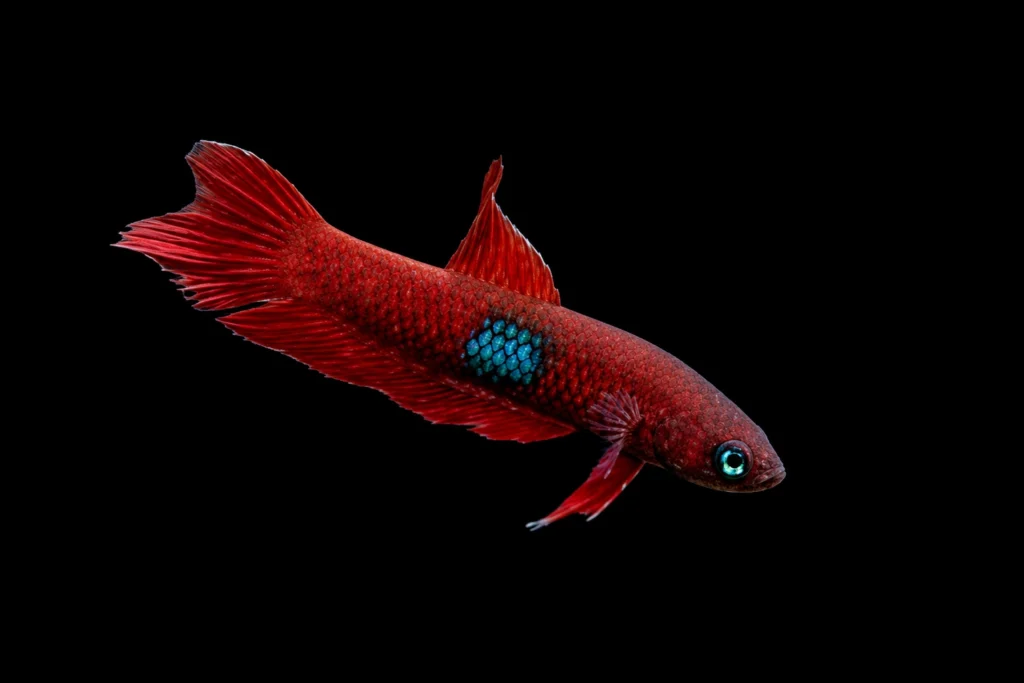
Betta brownorum
Possibly the most visually dramatic of all small wild Bettas — bright red body with a luminous blue-green cheek spot. Requires extremely soft, acidic blackwater. Deeply rewarding for experienced keepers.
5. Bubblenester vs Mouthbrooder: A Behaviour That Changes Everything
One of the most startling discoveries for anyone entering the wild Betta hobby is that not all Bettas build bubble nests. Nearly half of all wild Betta species are mouthbrooders — the male carries fertilised eggs inside his mouth for two to four weeks until the fry are developed enough to survive on their own.
During this entire period, the male does not eat.
Of TropicalZone’s current species, Betta Hendra is the mouthbrooder — making it particularly fascinating to observe and breed. Watching a male carry his young, cheeks visibly swollen, swimming slowly through a tank rich with leaf litter, is one of the most extraordinary things in freshwater fishkeeping. The three Mahachai and Smaragdina species are bubble-nesters, building floating foam nests near the surface as a more familiar but equally engaging reproductive strategy.
| Feature | Bubble-Nesters | Mouthbrooders |
|---|---|---|
| Eggs kept | Floating saliva-bubble nest near the surface | Inside the male’s mouth for 1–4 weeks |
| Who cares for eggs | Primarily the male (guards nest) | Male exclusively — does not eat while holding |
| Fry count | Higher — 30–200+ eggs | Lower — 5–30 fry, but more developed at release |
| Tank setup | Floating plants for nest anchor; calm surface | Caves, PVC tubes, coconut shells for male to hold safely |
| TropicalZone examples | Mahachai Green, Mahachai Blue, Smaragdina Carbon | Betta Hendra |
| Wider examples | B. imbellis, B. smaragdina, B. splendens | B. macrostoma, B. albimarginata, B. channoides |
6. What Wild Bettas Actually Look Like
Forget the constant blaze of colour in a pet store Betta. Wild Bettas operate on a completely different visual register — and once you understand it, you’ll find it far more compelling.
At rest, most wild Bettas are relatively muted — brown, olive, or greyish with subtle iridescent scales. This is camouflage. In the peat swamps and leaf-littered streams they call home, a brightly coloured fish would be a quick meal. But the moment a male spots a rival or begins courting a female, the transformation is immediate and electric. Fins flare. Colours flood the body. Iridescent green, blue, and red appear as if lit from within.
This contextual colouration — where the fish actively controls its display — is something you simply cannot observe in a pet store Betta, which has been bred to look dramatic at all times regardless of context. Seeing a Betta Mahachai Blue‘s sapphire scales ignite during a territorial display, or watching a Smaragdina Carbon’s emerald shimmer flash against its near-black body, is a fundamentally different experience from looking at a cup Betta.
7. Wild Betta Fish Care: What You Need to Know
Wild Bettas are not difficult fish — but they are specific fish. The difference between success and failure is understanding what their natural environment actually looks like, and replicating it rather than guessing.
Water Parameters
Most wild Betta species come from soft, acidic environments. The Mahachai species are exceptions — adapted to slightly harder, near-neutral water around Thailand’s coastal swamps, which actually makes them more accessible for Indian tap water conditions. The Smaragdina Carbon tolerates a broad pH range (5.5–7.5). The Betta Hendra, however, demands truly acidic blackwater — pH 4.0–6.5 — and will need RO water conditioning in most Indian cities.
Temperature
All four TropicalZone species thrive between 24°C–28°C, which aligns well with typical indoor temperatures in most Indian cities year-round. No chiller required for these species — a significant advantage over some highland wild Bettas like B. pugnax that need cooler water.
| Element | What to Use | Why It Matters |
|---|---|---|
| Leaf Litter | Indian Almond (Ketapang) leaves, dried oak leaves | Releases tannins, lowers pH, provides microfauna, creates natural feel |
| Substrate | Dark sand or fine gravel; peat for Betta Hendra | Dark substrate reduces stress and makes colours more vivid |
| Plants | Java moss, Christmas moss, Java fern, Anubias, Cryptocoryne | Cover, sight breaks, anchors the surface layer |
| Floating plants | Salvinia, duckweed, Amazon frogbit | Diffuses light; essential nest material for Mahachai and Smaragdina bubble-nesters |
| Hides & caves | Coconut shells, PVC pipe, driftwood caves | Essential for Betta Hendra mouthbrooding male; reduces stress for all species |
| Filtration | Sponge filter (low flow) | All wild Bettas come from still/slow water — strong flow stresses them and disrupts bubble nests |
| Lighting | Low to moderate; subdued | Mimics heavy forest canopy; promotes natural behaviour and richer colouration |
| Tank lid | Tight-fitting, no gaps | All Bettas jump; fry need humid air above water for labyrinth organ development |
Feeding
Wild Bettas are carnivores. In their natural habitat they eat insects, larvae, and small invertebrates. In captivity they thrive on a varied diet of live and frozen foods: bloodworms, daphnia, brine shrimp, mosquito larvae, and micro-worms. Many will eventually accept quality micro-pellets, but live foods are important for conditioning breeding pairs and bringing out peak colouration — especially important for the Betta Hendra male before an attempted spawn.
8. Setting Up a Blackwater Aquarium for Wild Bettas
A blackwater aquarium is water stained dark with tannins and humic acids from decaying plant matter — specifically leaf litter. In Southeast Asia, entire ecosystems exist in this dark, acidic, mineral-poor water. For species like Betta Hendra, it isn’t just a preference. It’s a requirement.
Setting one up is one of the most creatively satisfying things you can do in the aquarium hobby. No bright substrate carpets, no heavy CO2 rigs, no demanding fertiliser schedules. Instead: driftwood, leaf litter, low-light mosses, and a sense of something genuinely wild.
Basic Blackwater Setup Steps
Start with RO water or well-conditioned soft water. Add Indian almond leaves — one large leaf per 10 litres as a starting point. These release tannins slowly, softening and acidifying the water while providing leaf litter for the fish to explore. Add driftwood. Plant Java moss or Christmas moss on the wood. Place floating plants like Salvinia on the surface. Run a gentle sponge filter. Keep lighting subdued.
The water will turn amber or dark tea within days. This is not a problem — it is exactly right for Betta Hendra and many other blackwater species.
→ Browse Aquatic Mosses on TropicalZone — Perfect for Wild Betta Blackwater Setups
→ Browse all Wild Betta Fish on TropicalZone
9. Conservation Status: Why This Hobby Matters
Many wild Betta species are in serious trouble in the wild. Peat swamp deforestation, agricultural drainage, urban expansion, and water pollution have devastated the fragile micro-habitats these fish depend on. This is not an abstract concern — Betta Hendra, one of TropicalZone’s featured species, is listed as Critically Endangered on the IUCN Red List due to ongoing destruction of its native Borneo peat swamps.
| Species | IUCN Status | Primary Threat | On TropicalZone? |
|---|---|---|---|
| Betta hendra | 🔴 Critically Endangered | Peat swamp destruction in Borneo | ✅ Yes |
| Betta macrostoma | 🔴 Vulnerable / Endangered | Deforestation in Brunei; trade collection | ❌ Not currently |
| Betta mahachaiensis | 🟠 Vulnerable | Urban/industrial encroachment in coastal Thailand | ✅ Yes (Green & Blue) |
| Betta brownorum | 🟠 Near Threatened | Peat swamp loss in Borneo and Sarawak | ❌ Not currently |
| Betta smaragdina | 🟡 Least Concern | Relatively widespread; captive breeding well established | ✅ Yes (Carbon morph) |
| Betta imbellis | 🟡 Least Concern | Wider distribution; still locally threatened | ❌ Not currently |
When hobbyists breed wild Bettas in captivity and share offspring through the community — rather than sourcing wild-caught fish — they reduce pressure on wild populations while building a genetic safety net for species that may one day disappear from their natural habitats. Keeping wild Bettas, done responsibly, is a genuine form of conservation.
10. Why Are Hobbyists So Obsessed?
People who get into wild Bettas rarely go back. It’s not that they stop liking other fish — it’s that the wild Betta hobby opens a door to a completely different way of thinking about aquariums.
With a pet store Betta, the fish is the decoration. With a wild Betta in a carefully designed blackwater biotope, the fish is an inhabitant. There is a story behind every species — where it comes from, what its native swamp looks like, how it raises its young. The aquarium becomes a window into an ecosystem, not just a display tank.
The mouthbrooding behaviour alone is enough to permanently convert most people. Watching a Betta Hendra male carry his young — patiently, carefully, for weeks without eating — creates a connection to the animal that a cup Betta in a bare tank simply cannot offer. Then there’s the rarity. Finding a pair of these fish in India, setting up the right blackwater environment, and successfully witnessing a spawn is the kind of achievement that no amount of buying at a pet store can replicate.
❓ Frequently Asked Questions About Wild Betta Fish
Can wild Betta fish be kept with other fish?
It depends entirely on the species. Many wild Bettas are considerably more peaceful than Betta splendens and can coexist with small, non-fin-nipping tank mates. The Mahachai species (Green and Blue) can often be kept in community setups with small rasboras, pygmy corydoras, or peaceful nano fish, provided the tank is large enough and heavily planted.
Betta Hendra, however, is shy and easily stressed — it is best kept in a species-only tank or with extremely peaceful micro-fish that won’t outcompete it for food. As a rule, always research your specific species before adding tank mates, and avoid any boisterous or fin-nipping companions for all wild Bettas.
Are the wild Bettas on TropicalZone wild-caught or captive-bred?
TropicalZone imports its wild Betta stock, meaning the fish come from specialist breeders and exporters in Southeast Asia rather than being directly caught from their natural habitats. This is the responsible route for sourcing rare species — particularly for a Critically Endangered species like Betta Hendra, where every wild-caught individual removed from the peat swamps of Borneo adds pressure to a population that is already severely depleted.
If you go on to successfully breed your wild Bettas in captivity and contribute fry to other hobbyists, you’re actively participating in what the wider hobby considers a form of conservation — building captive populations that don’t depend on wild collection.
Can I keep two male wild Bettas in the same tank?
This depends heavily on species. Male Betta splendens will fight to the death in any tank — that’s a hard rule with no exceptions. But wild species show much more variety. The Mahachai species and Smaragdina are less aggressive and can sometimes coexist in large, densely planted tanks with many visual barriers — they may display at each other but rarely cause serious injury. Betta Hendra is more territorial and is best kept as one male per tank.
As a general guideline: always have a backup tank ready, observe closely during the first two weeks, and never assume two males will coexist without monitoring.
What is a mouthbrooder and how do I care for one?
A mouthbrooder is a Betta species where the male incubates fertilised eggs inside his buccal cavity (mouth) for one to four weeks until the fry are developed enough to survive independently. Betta Hendra is TropicalZone’s mouthbrooding species. During the entire incubation period, the male does not eat.
Caring for a mouthbrooding male requires getting him into peak physical condition before spawning — fed well on varied live and frozen foods for at least two weeks prior. Once he is holding, minimise disturbance and stress. A tight-fitting tank lid is critical: fry need access to warm, humid air just above the water surface to properly develop their labyrinth organs after release.
Do wild Bettas need CO2 injection or high-tech planted tanks?
No — and the natural biotope that wild Bettas come from is actually the opposite of a high-tech planted tank. Their native peat swamps and forest streams are dark, slow-moving, and low in nutrients. The plants that thrive in these conditions — Java moss, Christmas moss, Java fern, Anubias, Cryptocoryne — are all low-light, slow-growing species that need no CO2 injection and minimal fertilisation.
A wild Betta blackwater tank is one of the most accessible styles of planted aquarium you can set up. Leaf litter, driftwood, a sponge filter, low lighting, and the right mosses are all you need. TropicalZone stocks most of the plant species that work well in these setups alongside their wild Bettas.
Which TropicalZone wild Betta is best for a beginner?
For someone new to wild Bettas but with some fishkeeping experience, the Betta Mahachai Green or Betta Smaragdina Carbon are the best starting points. Both tolerate a broader range of water parameters than the Betta Hendra, neither requires RO water conditioning for most Indian tap water conditions, and both are bubble-nesters — a breeding behaviour more familiar to hobbyists who have kept pet store Bettas.
The Betta Hendra is genuinely an advanced species — not because it is fragile, but because it demands acidic blackwater conditions (pH 4.0–6.5) that require RO water and careful preparation. Start with the Mahachai or Smaragdina, successfully keep and ideally breed them, and you’ll have built the knowledge and confidence to take on the Hendra with proper preparation.
Why are wild Bettas more expensive than pet store Bettas?
Several factors drive wild Betta prices significantly higher. First, many species are genuinely rare — not mass-produced, with limited availability from specialist breeders and importers. Second, importing fish responsibly from Southeast Asia carries real costs in logistics, quarantine, and acclimatisation. Third, mouthbrooding species like Betta Hendra produce small clutches of 5–30 fry per spawn rather than the hundreds that B. splendens produces — making each individual more labour-intensive to raise.
The prices reflect rarity, import costs, and the specialist knowledge involved — not inflated margins. A fish like Betta Hendra at ₹2,499 from TropicalZone is genuinely rare livestock with real conservation significance.
Can I keep wild Bettas with shrimp?
With some caution, yes — for the Mahachai and Smaragdina species. Adult Neocaridina shrimp (like cherry shrimp) may be left alone in a densely planted tank with plenty of moss and hiding spots. Shrimp fry and juveniles are at risk in any Betta tank, however. Amano shrimp, being larger, generally coexist safely.
For Betta Hendra, a species-only tank or very carefully chosen tank mates are recommended — this is a shy, delicate species that doesn’t compete well with active inhabitants, and a busy tank with shrimp moving around may stress it. Nerite snails are usually fine in all wild Betta setups and serve as useful algae cleaners in the low-light blackwater environment these fish prefer
There’s a Whole World Beyond the Cup
The pet store Betta is where millions of people begin their journey with fishkeeping. But for those willing to look further, the wild Betta hobby offers something richer: a connection to living ecosystems, behaviours you cannot buy in a cup, and the quiet satisfaction of giving a rare, often threatened animal the environment it actually needs to thrive.
You don’t need a large tank. You don’t need expensive equipment. You need curiosity, the willingness to learn your specific species, and patience. TropicalZone is one of the very few places in India making these fish genuinely accessible to hobbyists who are ready for them.
Start with the Betta Mahachai Green. Set up a simple blackwater tank. Add Indian almond leaves and some Java moss. Then watch what happens when a fish lives in conditions it actually recognises.
You’ll understand the obsession immediately.🐋🐳🐬💙
